Dear Listeners,
Welcome to the My Legacy Podcast & Syndicated Radio Show, where we explore timeless lessons, meaningful connections, and the power of creating a living legacy. Hosted by Arndrea Waters King and Martin Luther King III, alongside Marc and Craig Kielburger, our show brings you transformative conversations that inspire impact, fulfillment, and healing.
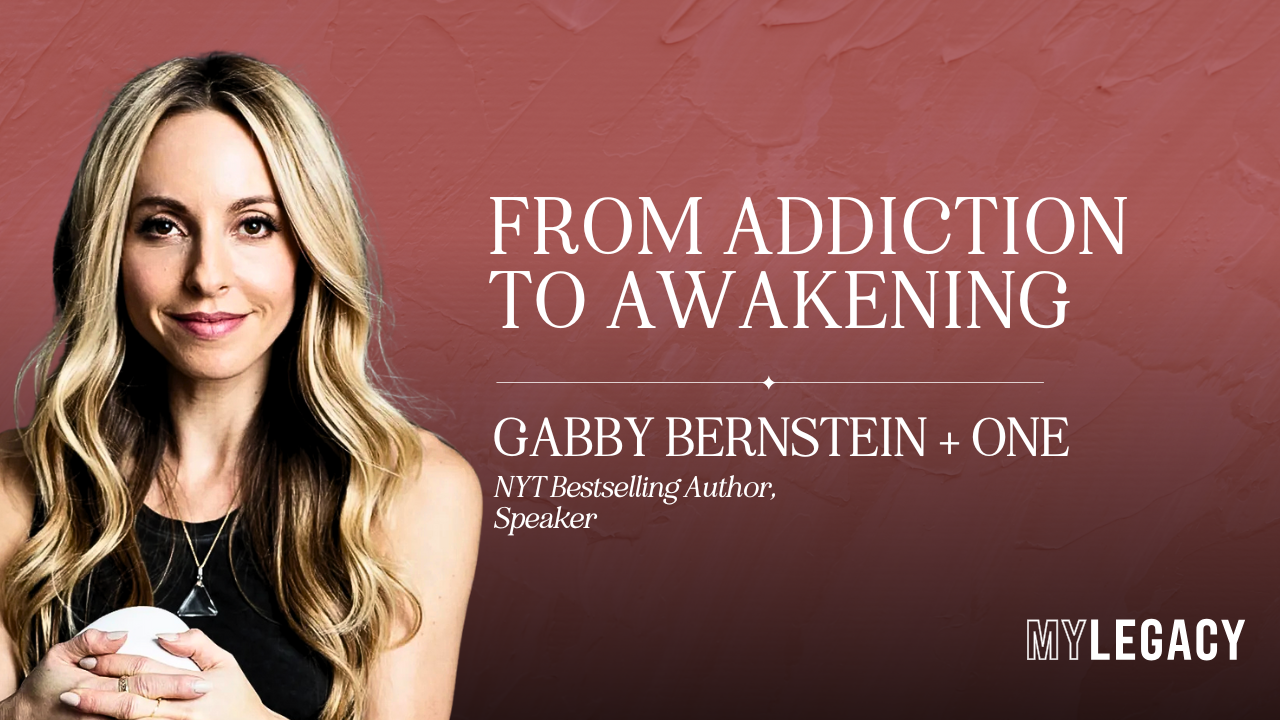
This week, we are honored to welcome Gabby Bernstein, bestselling author, trauma survivor, and spiritual teacher, who shares her extraordinary journey from addiction and disconnection to clarity, service, and spiritual leadership. Joining her is her dear friend Tara Stiles, the founder of Strala Yoga and a fellow pioneer in redefining what wellness can look like.
Together, Gabby and Tara discuss what it means to build a spiritual path grounded in authenticity, connection, and courage. Their friendship, forged over two decades, reveals the power of choosing love, surrender, and daily healing.
Episode Summary
This conversation with Gabby Bernstein is raw, vulnerable, and profoundly inspiring. Gabby opens up about her early struggles with addiction, anxiety, and disconnection—and the moment that changed her life forever. At 24, she fell to her knees in a West Village apartment and asked the universe for a miracle. What followed was a spiritual intervention that led her to 20 years of sobriety, global influence, and deep inner work.
Gabby and Tara reflect on their friendship as a source of spiritual grounding and healing. Gabby also discusses how motherhood, Internal Family Systems therapy, and the re-emergence of childhood trauma have transformed the way she views service, healing, and legacy.
This episode is an invitation to reflect on your own inner child, to soften your grip on perfection, and to embrace the parts of yourself still waiting to be healed.
What You’ll Learn in This Episode
Deep Dive: The Neuroscience of Trauma and the Power of Inner Child Healing
Gabby Bernstein’s story is both spiritually profound and deeply supported by psychological science. When she recalled childhood sexual abuse decades after it occurred, she described a moment that was both terrifying and liberating. This experience is aligned with what researchers call dissociative amnesia—a psychological defense mechanism where the brain protects itself by blocking out traumatic memories until a person has the emotional capacity and safety to process them. These memories are not lost but sequestered, often returning later in life when conditions are right. The International Society for the Study of Trauma and Dissociation (ISSTD) confirms that traumatic memories can be “stored in implicit, nonverbal memory systems” and resurface suddenly in adulthood, especially during therapy or life transitions. Source
What Gabby experienced next—intense physical symptoms like gastrointestinal distress, panic attacks, and night sweats—is also scientifically validated. Trauma is not just psychological; it is somatic. In The Body Keeps the Score, psychiatrist Dr. Bessel van der Kolk explains that traumatic stress is stored in the nervous system and can manifest physically for years, even in the absence of conscious memory. This means the body often remembers what the mind has forgotten. His research shows that unresolved trauma alters brain function, immune response, and even digestive health, offering a scientific framework for the mind-body connection Gabby speaks about so openly. Source
To heal, Gabby turned to Internal Family Systems (IFS) therapy, which treats the psyche as a constellation of “parts”—including the inner child, protectors, and exiles. This model, developed by Dr. Richard Schwartz, has gained increasing validation in clinical psychology. A study published in the Journal of Aggression, Maltreatment & Trauma found that IFS significantly reduced trauma symptoms, anxiety, and depression in adult survivors. The therapy works by helping individuals reconnect with their most wounded parts and engage them with curiosity and compassion rather than fear or avoidance. Source
Equally striking is how Gabby used writing as part of her healing. Her book The Universe Has Your Back was written during the height of her trauma recovery and became, in her words, “a transmission of healing.” Neuroscientific studies support this idea. According to the American Psychological Association, expressive writing helps the brain integrate traumatic memories, improves mood, and reduces intrusive thoughts. Writing accesses both hemispheres of the brain—allowing emotional content to be cognitively processed, which leads to greater emotional regulation and resilience. Source
In every stage of her recovery, Gabby’s journey reflects what trauma science continues to reveal: healing requires more than insight—it requires safety, embodiment, and the daily practice of connection. Whether through somatic therapy, deep friendship, spiritual practice, or the courage to revisit painful memories, her story is a roadmap for transformation. It reminds us that legacy is not born from perfection—it is shaped by the choices we make to heal ourselves so we can better serve others.
Reflection and Conversation Questions
Weekly Journal Prompts
Questions for Personal Reflection or Group Discussion
Questions for Families
Additional Resources
Next Week: In the next episode, we continue our exploration of legacy, leadership, and impact. We’ll hear from another extraordinary guest who is reshaping the way we think about storytelling, social justice, and personal transformation.
Make sure to subscribe to our newsletter and the My Legacy Podcast & Syndicated Radio Show on the iHeart app or wherever you get your podcasts.
Follow us on social @mylegacymovement on Facebook and Instagram or visit us at mylegacy.com
Thank you for being part of this movement. Let’s keep building our legacies together.
Follow My Legacy on Social Media: Facebook | LinkedIn | Instagram
Explore the What is My Legacy? Book: What is My Legacy? | Get the Audiobook
Listen to the My Legacy Podcast on iHeart Radio
Visit the My Legacy Website
Thank you for being part of this movement. Let’s keep building our legacies together.